Abstract
Maritime accident prevention requires timely, interpretable risk assessment that can support operational decision-making in Vessel Traffic Service (VTS) environments. This paper proposes an integrated framework that combines Large Language Models (LLMs) with machine-learning-based risk inference to unify accident risk probability estimation and dynamic scenario generation. Heterogeneous data sources—Automatic Identification System (AIS) trajectories, meteoro-logical observations, historical accident statistics, and tribunal adjudication reports—are standardized through a two-pass LLM pipeline and aligned on a uniform spatial grid. A gradient- boosting classifier with SHAP (SHapley Additive exPlanations) based explainability identifies key risk drivers, and isotonic regression calibration produces well-calibrated, continuous risk scores. For scenario generation, a HyperGraph-based retrieval-augmented generation (RAG) knowledge base encodes multi-way relationships among accident cases, causal factors, and maritime regulations; retrieved evidence is combined with calibrated risk scores in few-shot, Chain-of-Thought (CoT) prompts to generate interpretable accident scenarios with a cause–progression–outcome structure. A web-based dashboard with on-device text-to-speech delivers grid-level risk visualization, narrative risk scenarios, and actionable navigational advisories within a unified prediction–explanation–response
interface for maritime safety management.
Framework
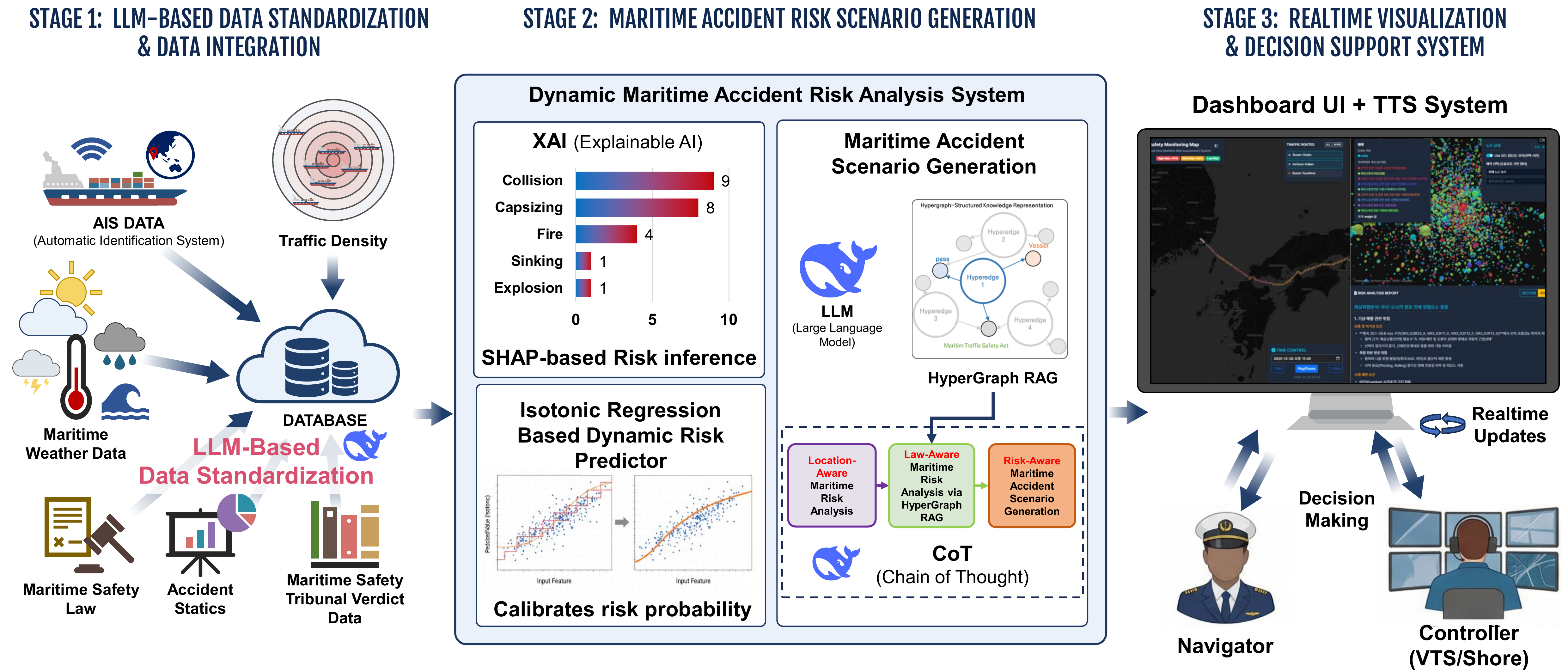
Figure 1: Overall framework of the LLM-based maritime risk scenario generation system.
HyperGraph-Based RAG UI
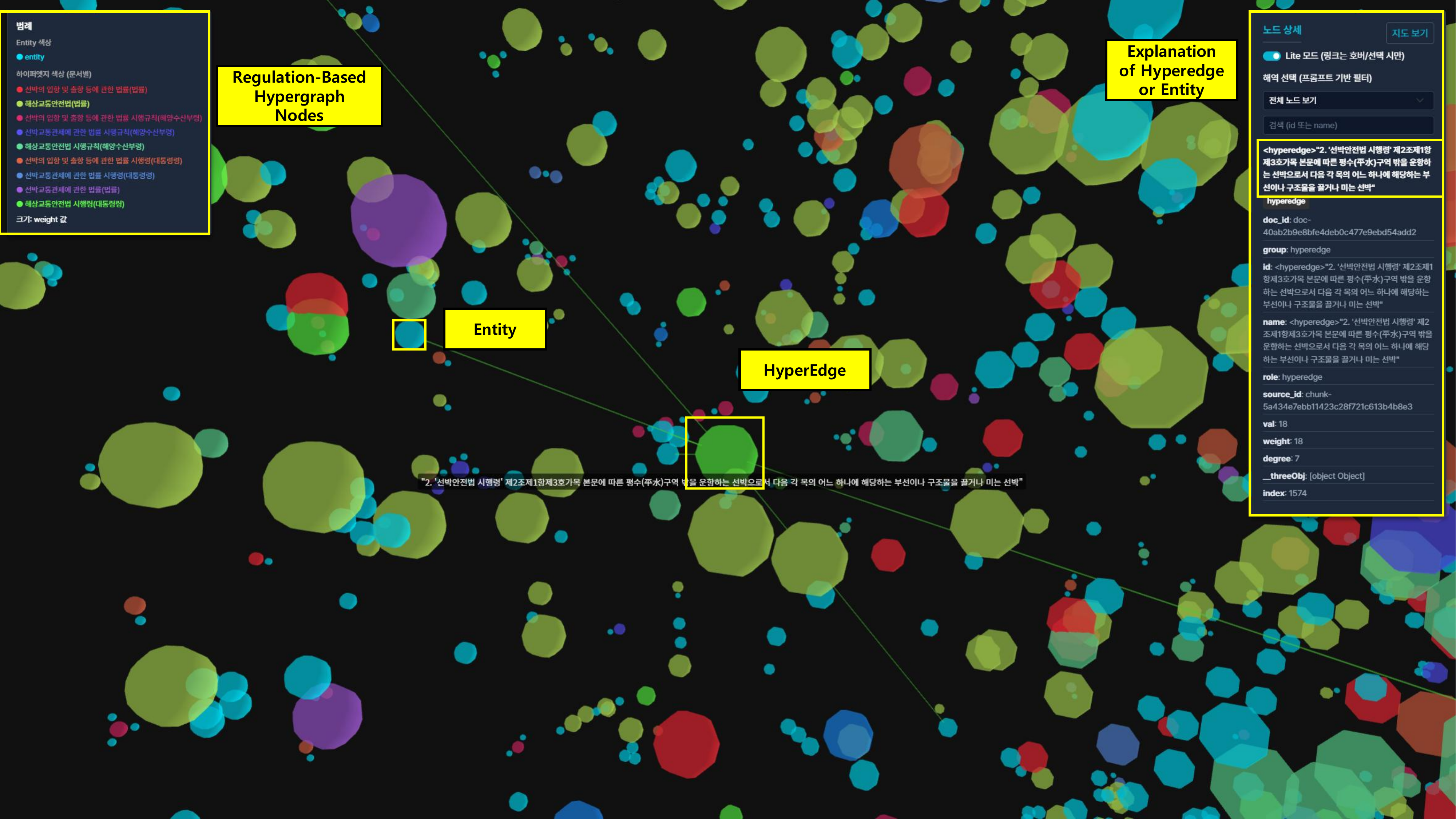
Figure 2: HyperGraph-based retrieval-augmented generation UI explanation.
Demo Videos
Video 1: VTS (Vessel Traffic Service) system demonstration.
Video 2: Route visualization demonstration.
Citation
@misc{park2026design,
  title={Design and Implementation of an LLM-Based Maritime Risk Scenario Generation System for Vessel Traffic Services},
  author={Park, Taekhyun and Hong, SeongMoon and Jo, Sangmin and Kim, Dohee and Bae, Hyerim},
  conference={IEEE CASE 2026},
  year={2026}
}